Sunday, December 28, 2008

Historical Time and Absolute Beginners

I headline this post with a screencap of Colin snapping a shot of Big Jill for a variety of reasons...most especially, perhaps, because this snapshot evokes the many ways Julien Temple's Absolute Beginners demonstrates the im/possibility of capturing any moment in time. (I also use it to sweeten your indulgence of my admittedly unbaked musings on this remarkable film.)

Absolute Beginners seems in many ways to be "about" the many accidents of generational timing, or the idea that you are who you are in no small part because of where and when you were born. As Temple's film begins, there's no shortage of historical referents, ranging from the scrapbooky imagery of the opening credits to the voiceover that overlays the historical frame (1958 - when the war of our childhood was finally over - when the option of being a teenager came to Britain). There's little doubt the film imagines itself to be "about" the cultural foment immediately prior the legendary Notting Hill riots. Yet, at the same time as such historical context frames our entrance into the cinematic landscape, the film's sonic and visual aesthetics (not to mention its casting and costuming choices) also cue another temporal frame: that of Thatcher's England, the post-modern, post-punk era in which a newly multicultural generation of Britons took the stage.

I happened to screen Absolute Beginners within 24-hours of seeing The Curious Case of Benjamin Button. This accident of timing amplified what I most admire about Absolute Beginners investigation of historical time. Where David Fincher's Benjamin Button (a similarly whimsically epic contemplation of love, loss and the problem of time) endeavors to create the illusion of "accuracy" in its depiction of "past" historical moments, Julien Temple's Absolute Beginners adopts an approach I find more enthralling but struggle to name. Perhaps it's that historical time telescopes in Absolute Beginners so that the past is present as it moves inexorably toward the future? Or maybe it's that each ostensibly separate moment in historical time nests, each within the other, so that there is no present without its being contained by the past? Or might it be the simpler metaphor -- that historical time filters any view of the present (not unlike how the colored gels used by Temple's DP so dramatically filter our view of the action)?

Among the many ideas swirling in this film, I emerged most compelled by Temple's ideas about historical time because, partly, I found the film's telescoping/nesting/filtering to be so productively provocative (in contrast to the stultifyingly contrariwise trajectories of Fincher's Button). More substantially, perhaps, Absolute Beginners is a retro/pomo musical told through various pop styles, with the complex histories of each musical style underscoring each narrative beat of the film. Through thinking about Temple's approach to time, I finally caught a glimpse of why Absolute Beginners was a musical: pop music enlivens the past so that it and the present become contemporary and contemporaries. Few things anchor the accident of generational timing more than pop music and, in Absolute Beginners, Temple used the distinctively retro/pomo aspects of 1980s British pop music to telescope the intergenerational history of Britain's post-WWII transformation. It's a remarkable move, really. Very different than, say, the questions raised by what might be this film's closest cousin, John Waters's Hairspray (1988), and reason enough to warrant this attentive re/visit. Thanks for the challenge.

-- Brian Herrera AKA StinkyLulu
(see also my unedited ramblings on the film here)

Inside/Outside: Spatial Conflicts in Absolute Beginners

- Hello all. My name is Glenn Heath, longtime hibernator, first time poster. I run a film blog called Match Cuts and enjoy teaching Film Studies in San Diego, CA. I look forward to the growing success and participation of this blog.

The opening sequence of Julien Temple's Absolute Beginners, anchored by a dynamic long take/tracking shot down a bustling London street circa 1950's, immediately establishes a racial barrier between interior and exterior spaces. Colin, Temple's hip young hero, glides through the thick crowds of various archetypes snapping pictures and introducing each with the efficiency of a true insider, while never losing the beat of the outside environment. Prostitutes, cops, sailors, and party-goers all mix to form a melting pot of exuberance. But this facade of multiculturalism reveals distinct fissures when Colin and his girlfriend Suzette exit a nightclub, the excitement of the party almost overflowing onto the street. They are followed closely by an interracial couple, Mr. Cool and Dorita, arguing about proper public etiquette for their relationship, with Dorita delivering a powerful finale - "It's one thing in there, but it's different on the streets." 

This response foreshadows a building tension between contrasting races, classes, and cultures in Absolute Beginners, a defining theme that comes to violent fruition in varying ways. The film challenges this fear of progress and the need to keep it inside, or hidden from the outside world, while portraying youth culture as a complex and daring force able to overcome corporate greed and artistic bastardization. Amazingly, Temple sees hope in his spastic protagonists and dissects interior spaces to clarify their specific potential, ultimately separating them from the staggering disappointments of adulthood. If David Bowie's conglomerate King comes to represent the draw of selling out, Colin and inevitably Suzette overcome this enormous void of consumption (best displayed in Bowie's dance number) and seek out the hidden joys of struggle, of tolerance, and of artistic collaboration. But even in the final moments of victory, after the brutal and bloody riots consume Colin's vision of Notting Hill, there's a sense of urgency toward deflating the power of bigotry and hate, that such destructive qualities could still crop up in the darkest corners of society and grow into a pandemic. 

Absolute Beginners might not be a great film, but it certainly has a lot of ideas on its mind. Maybe most interestingly, the film struggles to reveal how space directly reflects ideologies of all kinds, and how we view ourselves within these walls, real or imagined. 

Wednesday, December 17, 2008

Playing Watchmaker


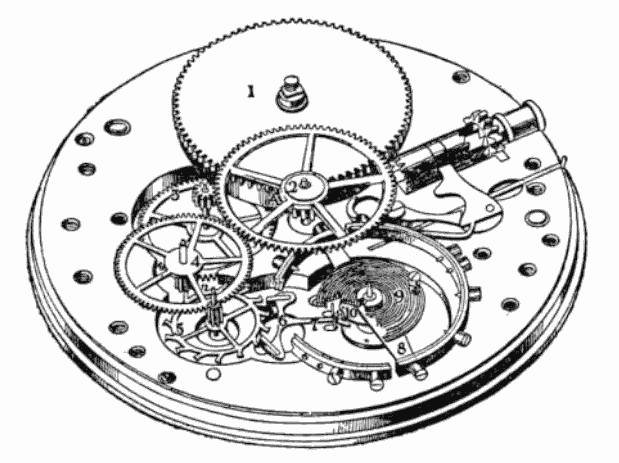
Analyzing a movie can be like taking apart a mechanical watch. I imagine a Swiss pocket watch, with a chain that clips onto a vest pocket. Peter Rinaldi has written that Absolute Beginners is a movie that doesn't always work. It's the watch that has to be set a little too often. So let's play the repairman. Let's take the watch apart on our little work bench and break it up into the little gears and bits of sub-machinery that make it run. I'll use the above diagram, made in 1919 by Harry Chase Bearley, as my guide. So, loupe firmly planted in my eye, here are the first parts I see:

1.First or main wheel to which mainspring is attached

This large wheel makes me think of the revolving floor at the film's upscale party, which in turn made me think of the revolving stages used by well-funded theatres: the kind where several sets are built so that they can be rotated in and out between scenes.

Absolute Beginners
is a film that could only be made on a sound stage and a back lot. The artificiality, the careful design of the settings, gives it a hyperreality unachievable in location shooting (conversely, there is a dream-like element that is only possible to achieve by shooting on location).

Another film springs to mind, made the year before: Year of the Dragon, by Michael Cimino. Cimino originally set out to shoot the film in Chinatown, but when that fell through, he had sets built in North Carolina (like the set of Leos Carax's Les Amants de Pont-Neuf, a gigantic recreation of Paris built in Montpellier). Had Year of the Dragon been shot in the real Chinatown, it would have been a very different film.

The cutaway set of Colin's house uses an image (found, as mentioned by Peter, in The Ladies Man, Tout Van Bien and The Life Aquatic, to name a few) that, despite its roots in theatre, has a fascinating effect in cinema. It allows us, in a single framing, to see several things going on at once, giving us a view of reality that's very different from the way we actually perceive it (see also: a previous Film of the Month, The Intruder). It is the ultimate wide shot, one that shows reality wider than we can ever actually experience it, showing connections between physically separated elements (another ancestor: the translucent floor in Hitchcock's The Lodger, which shows the feet of the upstairs neighbor; if there was ever an image that made a case against the concept of a "silent" image, this is it). This very complicated image is united by a single sound: a song.

8.Balance

Here is a movie that spends its first two-thirds as a musical comedy and then becomes a melodrama in the strictest definition of the term: a fictional performance (-drama) with songs (melo-).

3.Third wheel

Reading the name of this part makes me interpret it idiomatically, as the thing with no useful purpose that unbalances something. The extra person. But of course nothing is ever useless. An arbitrary addition creates something new. A work is made up of all of its elements, not just the ones that have a clear function. The credits in a movie last just as long as a scene, so why don't they ever get discussed (after all, they're part of the movie, too)? And the opening (photographs on a red background with the names of important individuals) and closing credits (scrolling upwards over a long shot of movie rain pouring down on the set) are set to the same song: "Absolute Beginners." Which points the way to the third wheel in the production: David Bowie, who gets high billing on most advertising for the film despite playing a fairly small part.

Bowie wrote the song to the film under the condition that he also got a role. It's Bowie's baritone ad man who steers the film towards Tashlin when it wants to go Minnelli. Bowie's musical number, it should me mentioned, was written by the singer himself .


9.Hairspring

The hairspring of a watch is the coiled piece of metal that regulates its movement. Our first instinct is to think of the script. First instincts must be resisted. Scripts have the distinction of being the only part of a film that can be tossed into a waste basket.

The film could be structured by the musical score, a combination (like the film itself) of a little original composition and a lot of adaptation, mostly of decades-old pieces. The bulk of it is by Gil Evans, but most of the musical numbers are composed by the performers: Ray Davies' "Quiet Life," the aforementioned Bowie song ("That's Motivation"), Tenpole Tudor's ode to Ted culture and the little cameo performances, like Sade's number in the club. Attempting to be commercially successful by cashing in on the popularity of these singers, the film gives the music the first priority in terms of how it should pace itself.

Tuesday, December 16, 2008

The "dollhouse-like/cut-out set/wide shot" study

Tout Va Bien (Jean Luc Godard, Jean-Pierre Gorin; 1972)

Absolute Beginners (Julian Temple, 1986)

The Life Aquatic with Steven Zissou (Wes Anderson, 2004)


Monday, December 15, 2008

Quiet Life


Does anyone have a theory why Ray Davies' character sings directly into the camera for the Quiet Life number? No one else does. Gives it a very music video feel, no?

First Impressions of Absolute Beginners


I'm Peter Rinaldi. I'm a filmmaker from New York. First time posting here. I also contribute various material to The Boutros Boutros Follies, including a film column called SIN-E-FILE, named after Godard's claim that he "has the sin of the cinephile". Nice to have this place to hang with fellow sinners.

This film selection is what FOTMC is all about. It is possible, though unlikely, that I would have eventually come across Absolute Beginners. But, without Mr. Vishnevetsky’s introduction, and the very nature of this “club”, I doubt I would’ve looked at it with the attention it deserves. I am a big Beatles fan and I walked away from a forced viewing of Julie Taymor’s Across The Universe with a sincere appreciation of Ms. Taymor as an artist. I feel like that experience prepared me and opened my mind wide enough to take in Absolute Beginners.

Watching it, I was reminded of Taymor’s film, along with One from the Heart and, and oddly enough, Do the Right Thing (Despite the race issues, which might make an interesting comparison, I’m speaking purely visually). And, as the camera kept moving, I couldn’t help but think perhaps Temple screened some Orson Welles and Max Ophuls in preparation for this ambitious undertaking. Some came before and some came after this 1986 film, but I think it is a stretch to think Temple was significantly influenced by, nor an influence of, any of these. [It can get silly to talk too much about influences. Take a look at this first line of an IMDB review. Maybe someone can tell me if this is joke: “Julien Temple's "Absolute Beginners" is probably more well known for it's breathtaking and legendary opening tracking shot through a gloriously campy backlot version of London's SoHo District (so influential it even served as an in-joke in Robert Altman's ‘The Player’)”]

Maybe we can discuss this, but I don't think Absolute Beginners is a great film. It doesn't have a depth that even approaches great work. But what is really fascinating for me is just how far it is from being a bad film, or even a mediocre film. This is where I am reminded of Across the Universe. A bad film is not one that fails. (What does "failure" even mean in art?) A bad film is one that is created without purpose, clear intent, without a singular vision. Temple has a vision with this film (like Taymor had with her film). It might be derivative. It might be corny, or even slightly embarrassing sometimes. But every shot seems to be done with a confidence and a force that is expressive and exciting. That can’t be said of even some great films. That alone might not make a film great, but it does make you keep watching with respect and appreciation. And all of the performances are on the same tonal page. Not an easy task with this kind of stylized work. This is the sign of a good director. The audience is never insulted. And if your mind is open enough, it is an enjoyable, even cinematically rewarding, time.
Thanks, Ignatiy, for this selection. I am excited to see what others have to say about it.

An (Absolute) Beginner's Guide to Framing in Cinemascope


stills from Absolute Beginners


Why Absolute Beginners? (An Overture)


Picking a topic for Film of the Month Club has an active element to it. When you pick a film, you're making a statement: you're telling everyone the sort of movie you'd like to see discussed. There's an idealistic element as well: your vision of Film of the Month Club, and of film discussion in general ("This is the sort of film we should be discussing.").

Chris Cagle e-mailed me a few months ago, asking whether I wanted to pick a film for Film of the Month Club to cover. I wrote back quickly: Absolute Beginners. A movie that doesn't have a very strong critical reputation, wasn't commercially successful, and doesn't even have a cult following that I'm aware of. It's, as auteurism has taught us, a "Julien Temple film," though I'd rather say it's a "movie directed by Julien Temple." It's neither refined nor always rewarding. It's undeniably a product of the great "lost decade" of cinema, the 1980s. So why Absolute Beginners?


A person writing critically (let's call him or her a critic, regardless of actual profession) should be able to write a hundred different essays about the same film, just as a filmmaker should be able to make a hundred films from the same set-up. This is does not invalidate criticism; it reaffirms it as a vital act. If there was only one correct answer, there would be no reason to ask questions, just as if there was a clear right and wrong there'd be no reason for morality or ethics.

Similarly, there is no right or wrong type of film to write about, no right or wrong directors. Many uninformative essays have been written about Fritz Lang. Many insightful things have been written about Tony Scott. It's rare that you read something original about film noir, yet people continue writing about it, when there are hundreds of equally valid genres that no one takes seriously (pornography, for one; American action films, for another). So my pick of Absolute Beginners represents a certain Utopian dream: getting a group of people to watch and consider a film no one watches or considers. To look directly into something that normally exists in our peripheral vision, that we only see out of the corner of our eye.

And the writers and the readers will find there's as much here as in any other film.

Monday, December 1, 2008

Kinship


Compared to some of Su Friedrich's work, Sink or Swim is a film that does not directly address lesbian identity. Of course, there's no obligation for a lesbian filmmaker to thematize and foreground her sexual identity. But Friedrich often does, and in an autobiographical film about the filmmaker's frought relationship with her father, coming out, stigma, or navigating straight kinship as an adult lesbian never enter into the film. This flows, in part, from the appropriation of structural filmmaking to intermediate between Friedrich and the film's autobiographical persona.

There is one segment, though, in which lesbian sexuality appears directly. Titled "Kinship" the sequence continues a motif on kinship that runs throughout the film (her father, an academic, has written on kinship structure while being seemingly unaware of how his abstraction of kinship gets in the way of connecting with his own family). Yet the father is absent from this segment. Instead of the child's voiceover (a few other segments, like "Ghosts," lack it), a German lament plays (the leider her mother would listen to?) over three types of shots: handheld camera recording plane, train, and car travel; contemplative shots of nature, seemingly in the rural West; and two women in a sauna who eventually embrace under the shower.


Part of the power of the sequence comes from the lack of voiceover or sync sound accompanying the images and from the black leader before the final embrace shot.

A complexity meanwhile emerges from its uncommunicativeness in narration: we as viewers are not sure what the relation between these three strands, nor between a given strand and kinship. Even the connotation of the shots is unclear: is the lone figure in the desert landscape a sign or isolation or a marker of home movie accident? Is one woman in the shower consoling her crying partner, or are they embracing in romantic or sexual joy? This uncommunicativeness, of course, is the hallmark of experimental work which by nature tends to avoid programmatic meanings in favor of ambiguous and evocative ones.

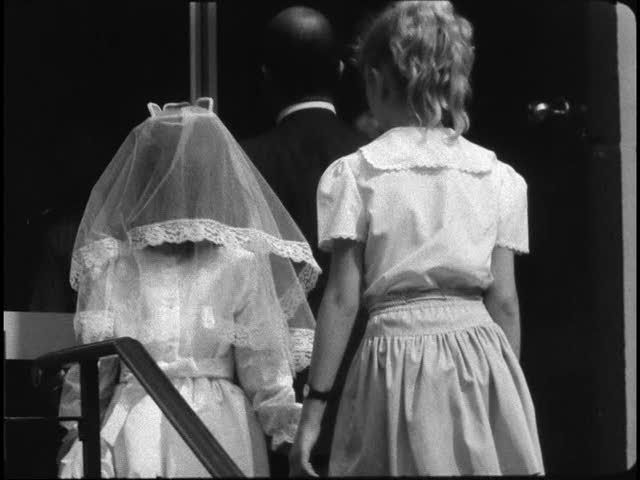
But the step back from communication is itself, structurally meaningful in the film. Sink or Swim has a number of sequences, each with a range of communicative possibilities. In some, the image and sound line up. The image may not be the literal recording of the event described by the girl's voiceover narration, but it is consonant with it: shots of a lake, or of the filmmaker in her home. In others, the apparent mismatch is a device of defamiliarization; we come to see the drama related in the voiceover in unrelated events, such as children ice skating, or a first communion. Finally, as in Kinship, the mismatch between images and exposition opens up an interpretive breach into the film: what is the relation?

To my eye, the meaning is second order. The point of the segment is that lesbian kinship is distinctive, with its own emotional bonds, yet it is also difficult to express. Without actually saying it, the film seems to suggest that the lesbian (or maybe just the filmmaker herself) is isolated from straight kinship culture while also creating something of her own.

Monday, November 17, 2008

Sink Or Swim: An Alphabetic Countdown in Images


[This is cross-posted with my blog Only The Cinema, where it is a part of my ongoing "Films I Love" series, which is intended to highlight my favorite films with a brief analysis and a selection of screenshots.]

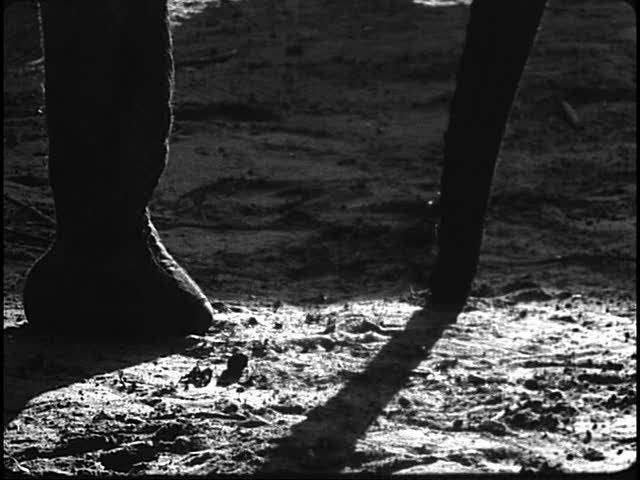
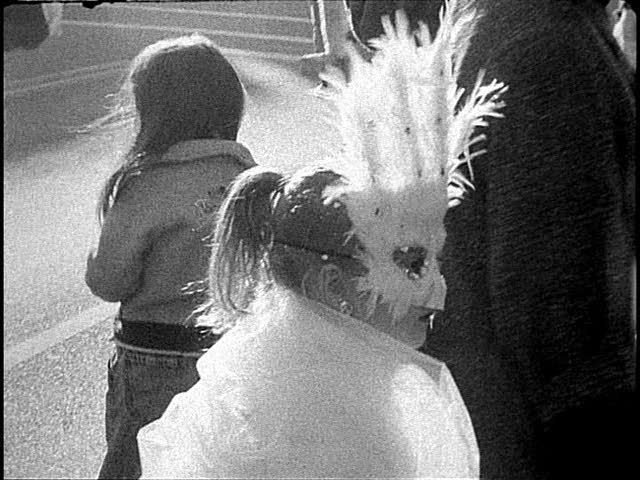
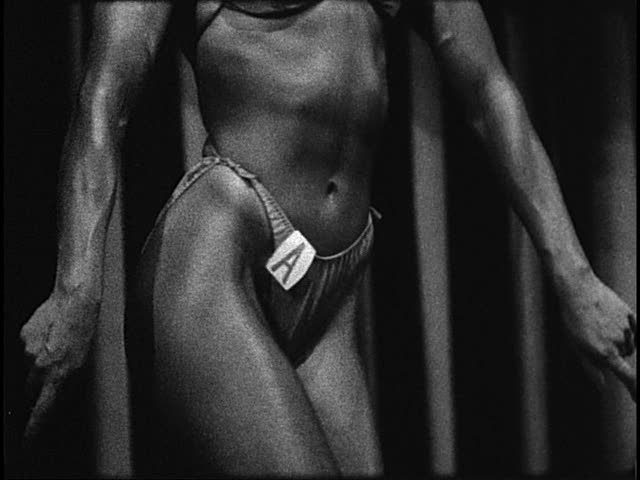
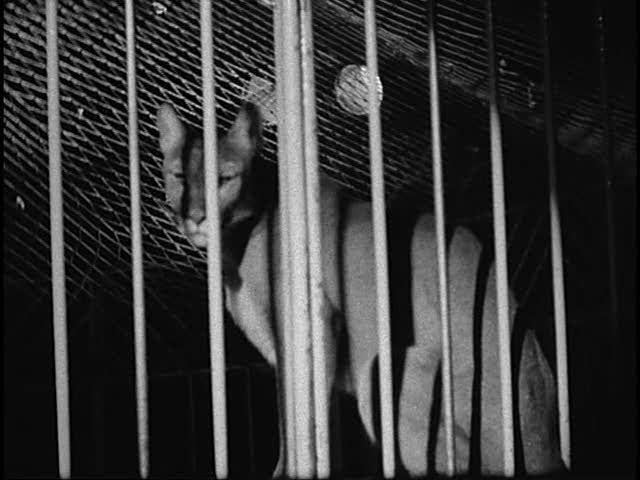
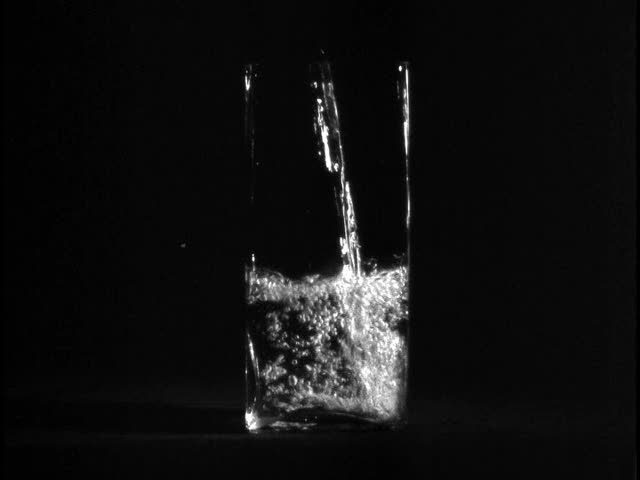
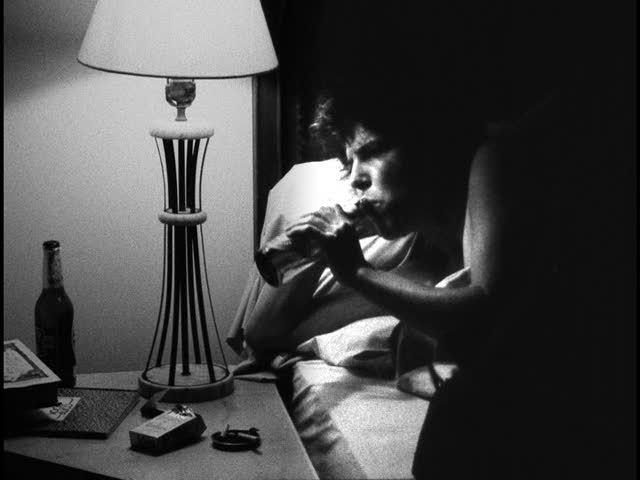
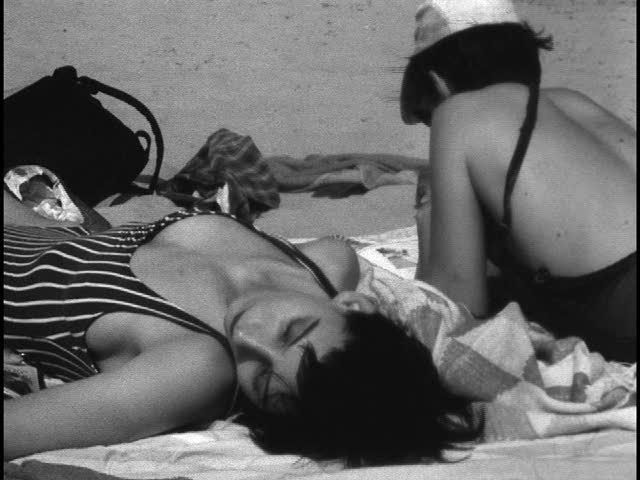
Sink Or Swim, Su Friedrich's experimental short in which she attempts to express, through a wide variety of techniques, her ambivalent experiences with and feelings for her often-absent father, has a rigorous formal structure driving its autobiographical narrative. The film consists of 26 sections, each one titled with a single word, the first letters of which count down through the alphabet. The film opens with a segment titled "Zygote" and ends with a section that has three titles, all from Greek mythology: "Athena," "Atalanta," and "Aphrodite." There is one screen capture here from each of the film's 26 alphabetical sections, mimicking the film's structure and demonstrating the discrete feel and methodology of each separate part in the film's whole. The titles sometimes consist of deadpan jokes or puns (the "X Chromosome" section is simply a sustained shot of an elephant's trunk, for obvious reasons), but more often the titles relate obliquely to the images they introduce. There is, in addition to the stories provided by the film's voiceover, a secondary narrative running through the film that is sustained wholly by the titles and their relationships to the images. Friedrich's lesbianism is brought in almost exclusively in this way, particularly in the sections entitled "Temptation" (images of female bodybuilders) and "Kinship" (in which, at one point, an image of a lesbian couple embracing in a shower is slowed down and manipulated with video processing). These subtexts largely go unspoken, so that the film becomes a story about desire developing, placed in opposition to the filmmaker's antagonistic relationship with her father.


Monday, November 10, 2008

Sink Or Swim: Introductory Thoughts


[This is cross-posted with my blog Only The Cinema. These are my introductory thoughts about November's Film of the Month. I will be posting in more detail about specific aspects of the film as the month goes on, but hopefully this will get the conversation started to some degree, both in comments and in other people's posts. If you haven't seen the film yet, I suggest you do so before reading, since the film (like all films, really) is best experienced with a fresh perspective.]

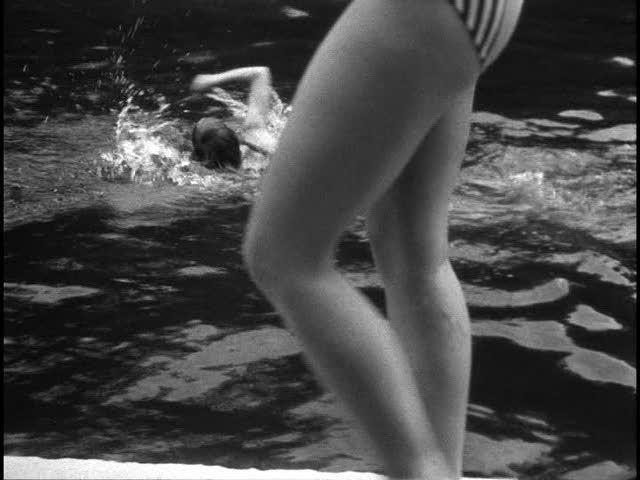
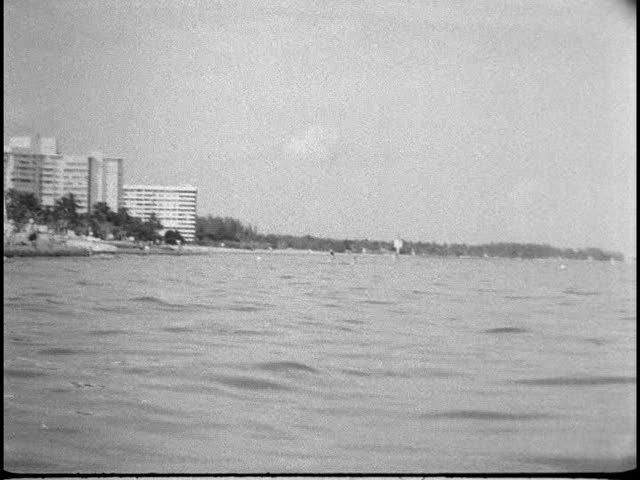
The title of Su Friedrich's autobiographical essay-film Sink Or Swim comes from the implied moral of one of the stories she tells about her relationship with her father, a robotically unemotional, distant, authoritarian figure for whom she holds very ambivalent feelings well into adulthood. In the story, she tells her father that she wants to learn how to swim, so he takes her to the deep end of the local pool, sits her down to explain the mechanics of swimming, and then simply throws her into the water to figure it out for herself. The lesson is obvious: learn to swim, or sink like a stone. This is a shocking story, a horrifying account of a father whose behavior towards his children at times verges on (or even crosses the line into) outright child abuse. And yet Friedrich presents the tale, as she does everything in the film, with a cool, even tone. The film is sporadically narrated by a young girl (Jessica Meyerson) whose childish, hesitant reading of the voiceover text gives the film the aura of a nostalgic ode to childhood, an impression that works against the sometimes horrific nature of the material being remembered. Friedrich deliberately distances herself from these intensely personal stories, searching for universality in her own life. The film is more than anything else an attempt to process and explore the ways in which childhood experiences shape a person's thoughts, attitudes, and outlook later in life.

The film is rigorously divided into twenty-six uneven parts, each of them corresponding to a letter of the alphabet, which proceed in descending order through the titles of the segments: "Zygote," "Y Chromosome," "X Chromosome," "Witness," and so on. This is the logic of childhood, attempting to arrange complicated events into nursery rhyme containers, a conceit that shows up in the soundtrack as well when the narrator murmurs sing-songy children's tunes or recites schoolyard poetry. The structure is complex and subtle, with texts and subtexts running in parallel through the visuals, the narration, and the one-word titles, which appear as onscreen text announcing each new section. The relationship between these three elements is complicated, sometimes coming together to enforce one another and enhance the overall point, while at other times the separate elements are telling different stories.

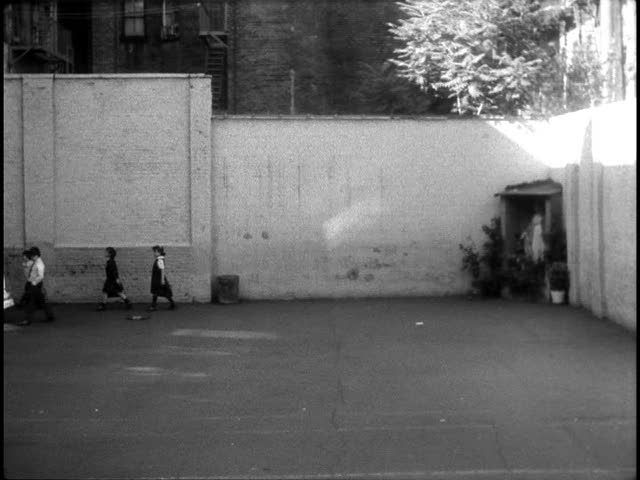
Early on, in a section titled "Utopia," the voiceover relates how Friedrich (always referred to as simply "the girl" from the film's third-person viewpoint) and her sister were not allowed sugar or TV as children, and how they got to indulge each of those luxuries once a week at a neighbor's apartment. There, the girls would get ice cream sundaes, sit in the dark and marvel at a televised circus. Friedrich accompanies this story, naturally enough, with circus images, but there is an undertone of forbidden sexuality in the images that is not present in the young girl's narration: a pair of circus performers, two shapely girls with horse tails and bare bottoms cavorting around; closeups on acrobats and strongmen whose form-fitting outfits emphasize their muscular bodies. This suggestion is carried over into the next section, "Temptation," which transitions naturally from the toned, athletic bodies of the circus performers to a closeup on the bikini-clad torso of a woman bodybuilder, while the voiceover describes the Greek myth of Atalanta and Hippomenes. The relationship between the images, titles, and voiceover in these two sections suggests an unspoken narrative beneath the text: the development of lesbian desire interwoven with a childhood fascination for mythology (those powerful, statuesque goddesses) and the carnivalesque. In this way, Friedrich explores the ways in which the child flows into the adult, without venturing into simplistic cause-and-effect chains. Rather, the film's unique structure allows her to view her life as a continuum, to see traces of various threads in her life as they develop through her personal obsessions and interests over time.


Among these, the most important thread is obviously her relationship with her father — and from that, the notion of fatherhood and parenthood as a generic concept. Friedrich explores this subject in many ways. Throughout the film, the voiceover returns periodically to stories about her childhood, usually illustrated with images that are only obliquely related to the story being told. The thrust of the film is to make its highly specific narrative more universal, to move away from this specific girl with her distant, somewhat abusive father (who ultimately leaves the family when Friedrich is around 11 years old). She is not talking about herself; she is talking about "the girl" and "the girl's father." And her images are often just as generic, just as timeless. She pairs the swimming anecdote with peaceful images of a community pool and the kids swimming in it. There is nothing to suggest the deadpan horror of the story itself. Later, after her father leaves, she describes her mother's erratic behavior, dispassionately recounting a scene where her mother placed Friedrich and her sister on a windowsill, high above the ground, and threatened their father, down below, that they'd all jump to their deaths. The father, true to his nature, simply stares at them, shakes his head, and walks away. This harrowing, unbelievable story (appropriately contained in a section called "Insanity") is accompanied by prosaic images of a hospital, suggesting the mental breakdown of Friedrich's mother following the divorce. When the story reaches its climax, the camera pauses, looking out a window, an unpopulated view substituting for the emotionally fraught content of the story.

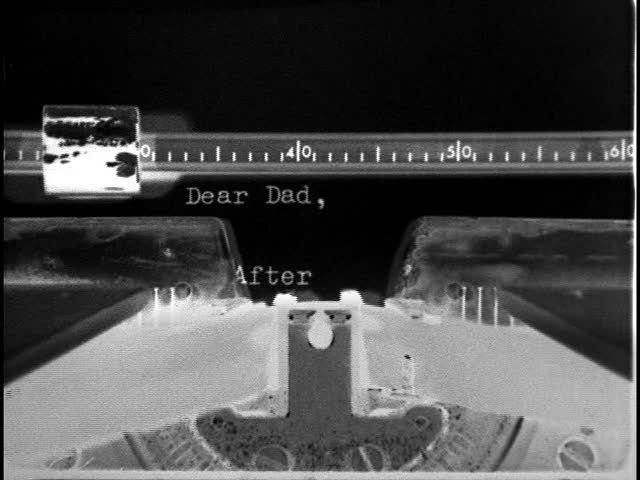
This distanced, objective approach reaches its logical endpoint in the section entitled "Ghosts," which consists entirely of a static shot, manipulated to be a negative image, of a typewriter as Friedrich writes a letter to her father. Since the image is a negative, her words show up white on black paper, accompanied only by the sound of the typewriter. This is the most direct section of the film, in many ways: the only one in which Friedrich uses the "I" and discards the third-person disguise of the narration, and also the only one in which there is some direct sound. Throughout the rest of the film, the soundtrack is almost clinically clean and polished; whenever the voiceover pauses, which is frequently, there is complete silence. There's an aesthetic purity to this approach, and Friedrich only rarely compromises the soundtrack's dichotomy between minimal speech and absolute silence: in the "Kinship" section, she accompanies images of travel and a lesbian shower scene with a Germanic opera piece that her mother loved, and in "Ghosts" the typewriter clicks and clatters above a backdrop of tape recorder hiss, an intrusion of noise into the film's austerity. The text in "Ghosts," typed rather than spoken, is more directly autobiographical than the voiceovers, shedding the artifice of "the girl" to speak directly about how Friedrich's mother reacted to the divorce. It is the film's most personal and unmediated segment, but it is also aesthetically remote, forcing the audience to actively read this story as the words appear one by one, rather than simply listening as they had to the others. Even while briefly stepping closer to the material of her story, Friedrich makes sure that she does not eliminate the artifice that constrains her autobiography into a form where she can explore and examine it at will.

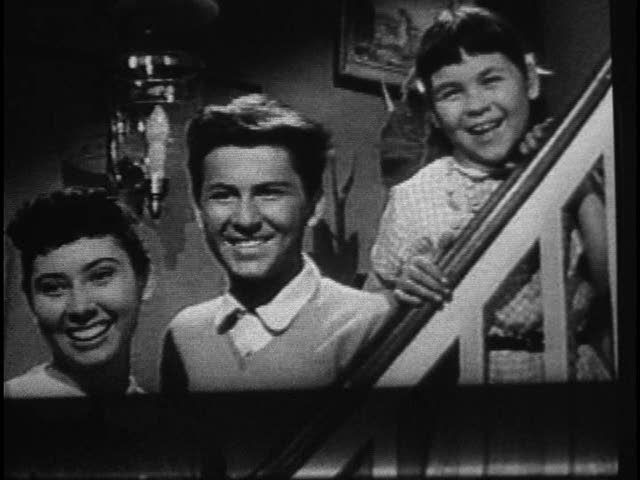
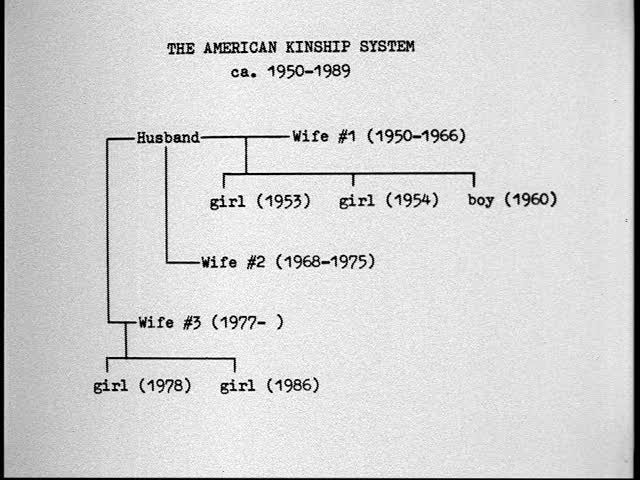
Throughout the rest of Sink Or Swim, Friedrich deals with her father's legacy in a more indirect, objective manner. One segment approaches him by discussing a book he wrote, which posited that the goddesses Aphrodite and Demeter, representing romantic love and motherhood, were once aspects of a single feminine diety, who was split in two because of men's discomfort with the dual nature of women. Friedrich cleverly illustrates this essay by alternating between pieces of art that could represent the two goddesses and their distinct aspects: for Demeter, Christian iconography showing the Madonna and child, and for Aphrodite, Japanese erotic prints. Friedrich subtly accentuates the surprising similarities between the two forms of art, bolstering her father's argument by transitioning from an image of the baby Jesus suckling at his mother's nipple to a much filthier image of a man nestling in his lover's breasts. In another scene, she attempts to understand her father in anthropological terms, filling the screen with a family diagram that traces her father's progress from Wife #1 to Wife #2 to Wife #3, but obviously explains little. Meanwhile, the sequence "Homework" is completely silent and consists only of images from 50s family sitcoms, showing a scrubbed, smiley vision of family happiness through a haze of static and video distortion. Friedrich lets these images sit without commentary, the media fantasies of fatherhood and family violently disconnected from her own experiences. The film fits all of these varied approaches and aesthetic techniques comfortably into its formal structure, as Friedrich uses all the means available to her to better understand and express the feelings and ideas brought up by thinking about her father.


Friday, October 31, 2008

November Film of the Month: Sink Or Swim (Su Friedrich, 1990)
Hey there, I'm Ed Howard, a film blogger and comics blogger, and I've been asked to provide November's Film of the Month selection. I thought long and hard about this decision, and there were many films I considered, including some I hadn't seen and therefore wanted to explore for the first time. But ultimately I went with a somewhat safer choice, opting for a film I know well and in fact consider one of my favorite avant-garde shorts. It's also a film that's perhaps less known outside of super-specialized film "ghettos" like LGBT cinema, or simply avant-garde cinema in general. There's an unfortunate tendency to take films that deal with gay issues or other niche thematic concerns and to treat them as though they're only of interest to a small subset of the population. Nothing could be further from the truth, especially in the case of the remarkable filmmaker who I'm urging everyone to check out this month.

The film is Sink Or Swim, a deeply personal and formally imaginative autobiographical essay made by Su Friedrich in 1990. It's a rumination on her childhood, and especially her relationship with her father. I won't say any more about it here, and I'll leave it to each of you to discover the film's unique formal structures for yourselves. I know other posters usually include reviews at this point, but I would strongly warn you not to read anything ahead of time. There's no possibility of "spoilers," per se, but it's a film that's best experienced with very little idea of what it's like ahead of time. That said, if you have seen the film or really can't resist piquing your curiosity further, Fred Camper has written a really great analysis/review of the film. There's also an interesting review by Michael Zryd at Senses of Cinema.

For those who wish to follow my lead and watch Sink Or Swim this month, the film is available, along with most of Friedrich's other films, on DVD from Outcast Films. This DVD also features two of Friedrich's earliest short films, Cool Hands, Warm Heart and Scar Tissue, so you can catch a glimpse of the filmmaker's (relatively modest) beginnings. While I'd like to see everyone buy the DVD directly from Outcast, thus supporting a small DVD company, the film is also readily available from Buy.com (the cheapest price I see online), Amazon, Greencine, and Netflix.